
· InkMentors
Tattoo Machine Stroke Length for Black and Grey
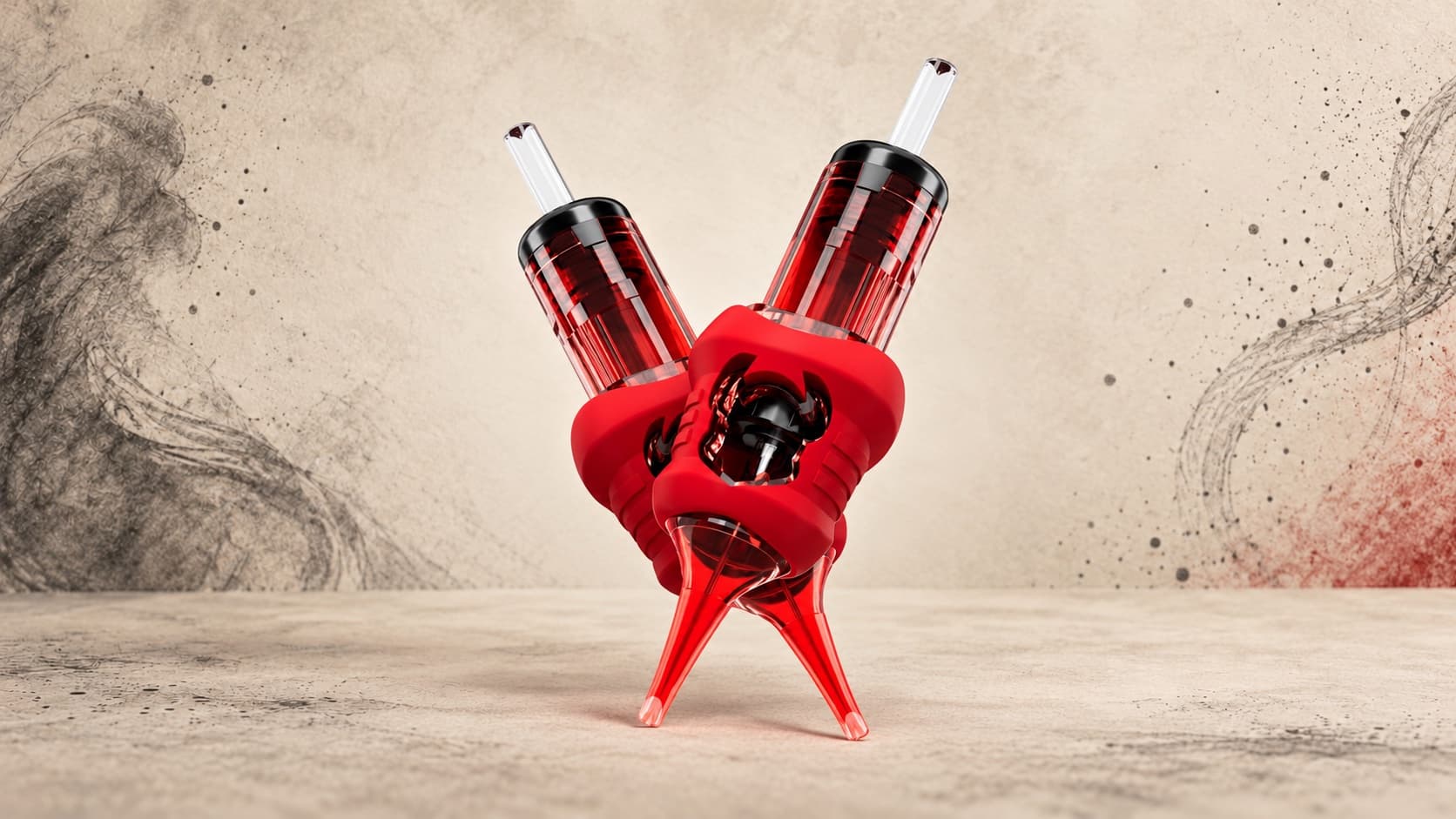
Editorial composition based on official INKin El Diablo product photography, with an AI-generated setting.
The short answer
A shorter stroke hits more often with less force, which suits soft shading you build in layers, Fábio Guerreiro runs 2.8mm for that. A longer stroke hits harder and less often, which suits texture and dots that have to stay sharp after healing, Big Dave runs 5.0. Neither is correct on its own.
The rest of this article is how to decide which one your piece needs.
What stroke length actually is
Stroke length is how far the needle travels on each cycle. It is measured in millimeters and it changes two things at once.
A shorter stroke covers less distance, so the needle completes more cycles in the same time. Each individual hit carries less force. The result is a high number of gentle impacts.
A longer stroke covers more distance, so it cycles more slowly, and each hit arrives with more force behind it. The result is a lower number of harder impacts.
That is the whole mechanical story. Everything else is about which of those two profiles the job needs.
Why two artists you would both trust give opposite advice
This is the part most stroke-length guides skip, and it is the most useful part.
Fábio Guerreiro shades most of his work at 2.8mm. His reason is specific: it hits more often with less force, which lets him build a tone without wrecking the skin. He works large scale black and grey, where the finish is a soft, saturated shadow and the enemy is trauma.
Big Dave will not go near a low stroke. He runs 5.0, and when he tried a lower one the healed result came out too smooth, which is not the finish he wants. He works dotwork and geometric, where a dot still has to read as a sharp dot in ten years.
They are describing the same setting in opposite terms, and neither of them is wrong.
Fábio is laying soft, saturated shadow. Dave is landing a dot that has to survive a decade. Different jobs, different tools.
If you have ever been confused by stroke-length advice, this is why. You were reading two correct answers to two different questions.
One artist, three strokes
And it is not only between artists. Fábio changes stroke within his own work:
-
2.8mm for shading, because it hits often and gently and lets him build tone in layers
-
3.7mm for solid blacks and lines, where he wants more force per hit
-
4mm to 6mm in his 3RL whip shading work, because on a lighter stroke the texture looks right on the fresh tattoo and then disappears once it heals
One artist. Three strokes. Because he is doing three different things.
That last one is worth a second look. The texture problem is not about how the piece looks when the client leaves. It is about whether the dot hit hard enough to still be there in a year. A whip-shaded texture built on a light stroke can photograph beautifully on the day and read as flat grey at four weeks.
The question that picks the stroke
Before you set anything, ask one thing: what has to survive?
If the answer is a smooth gradient, the stroke comes down. You want many gentle hits so you can build saturation in light, crossed layers without overworking the skin. This is soft shading, grey wash, large fills.
If the answer is visible texture, the stroke goes up. A dot or a whip-shaded mark has to land hard enough to still be distinct after healing. A gentle hit that reads as texture on day one may simply blur into the surrounding tone.
If the answer is a solid, crisp edge, the stroke goes up moderately. Lines and solid blacks want force per hit rather than frequency.
| What has to survive | Stroke direction | Example from our mentors |
|---|---|---|
| Smooth gradient, soft shadow | Lower | Fábio, 2.8mm, black and grey shading |
| Solid black, lines | Mid | Fábio, 3.7mm |
| Visible dotted texture | Higher | Fábio, 4 to 6mm in 3RL whip shading |
| Dots that stay dots for a decade | Higher | Big Dave, 5.0mm dotwork |
Where the usual advice falls apart
Here is something worth knowing before you trust any stroke-length article, including this one.
There is no published research on tattoo machine stroke length. We looked. What exists is manufacturer guides, supply-shop blog posts and practitioner experience. The ranges you see quoted around the internet are trade knowledge, not measured findings.
That is not a reason to ignore them. Trade knowledge from people who tattoo every day is real knowledge. But it is a reason to ask one question of any stroke advice you read: who is saying this, what do they tattoo, and why do they run that number?
A range in a catalog tells you nothing about whether it suits your work. "2.8mm, because it hits more often with less force and I shade large scale black and grey" tells you everything, including whether it applies to you.
What stroke length will not fix
We would rather say this clearly.
Stroke is one variable among several. It interacts with your needle configuration, your voltage, your hand speed and your depth. Changing stroke while everything else stays the same will change your result, but the same stroke on a different machine with a different needle will not behave identically.
Voltage is machine-dependent. You will see voltage numbers quoted alongside stroke advice. Big Dave runs 9 for lines, 8 for dots and 6 for whip shading, and that map is his, on his machine. Copying someone's voltage onto different hardware is not a transfer of technique.
Stroke will not fix a depth problem. If your work heals patchy because the pigment landed at inconsistent depths, a different stroke will not solve it. We covered that separately in How Deep Should a Tattoo Needle Actually Go? and in Why Does Black and Grey Tattoo Shading Heal Patchy?
Stroke will not fix a patience problem. Saturation is built, not stamped. No stroke length lets you put a finished shadow in on one heavy pass, and chasing one is how skin gets overworked.
How to actually test this
Change one thing at a time, and judge it at four weeks.
Run the same technique on comparable skin at your current stroke, then at a stroke in the direction the job calls for. Photograph both fresh, under the same light. Photograph both again at four weeks under the same light.
The fresh photos will tell you almost nothing. The four-week photos are the test. Texture that vanished, tone that went flat, skin that stayed raised, those are the answers, and you only get them by waiting.
If you want to see these choices being made across a real piece rather than described, the stroke, the needle, the dilution and the movement chosen together for a specific finish, Mastering Shadows covers the soft shading side and 3RL Whip Shading 2.0 covers the texture side.
Frequently asked questions
What stroke length is best for tattoo shading?
For soft, saturated black and grey shading, a shorter stroke works well because it hits more often with less force, which lets you build tone in layers without overworking the skin. Fábio Guerreiro runs 2.8mm for most of his shading. For shading where visible texture has to survive healing, the stroke goes up instead.
Why do some artists say use a low stroke and others say use a high one?
Because they are doing different jobs. A low stroke suits soft gradients built in gentle layers. A high stroke suits dots and texture that have to land hard enough to still be distinct after healing. Big Dave rejects low strokes for dotwork because the healed result came out too smooth for the finish he wants.
Does stroke length affect how a tattoo heals?
Indirectly, through trauma and through what survives. More force per hit means more trauma, which matters when you are building saturation in several passes. It also means texture that holds, which matters when the mark has to stay distinct. Neither is better in general; it depends on what the piece needs.
What stroke length should I use for lines and solid black?
More force per hit than you would use for soft shading. Fábio moves to 3.7mm for blacks and lines while shading at 2.8mm. The exact number depends on your machine and needle, so treat that as a direction rather than a setting to copy.
Why does my whip shading texture disappear after healing?
Often because the stroke was too light. A gentle hit can produce texture that reads well on the fresh tattoo and then blurs into the surrounding tone as the skin heals. This is why Fábio runs 4mm to 6mm in his 3RL work rather than going lower.
Can I just copy another artist's stroke and voltage settings?
Not reliably. Stroke interacts with your machine, needle configuration, hand speed and depth, and voltage numbers in particular are specific to the hardware they were measured on. Use someone's settings as a starting direction, then test on comparable skin and judge the result at four weeks.
Related: How Deep Should a Tattoo Needle Actually Go? and Why Does Black and Grey Tattoo Shading Heal Patchy? For choosing between techniques rather than settings, see One Style, Many Techniques.
Reader exclusive
Consider this a gift
Good for 10% off any course or design tool, whenever you feel ready.
Browse coursesGet new posts in your inbox
Join the newsletter for fresh tutorials, free resources and studio-tested technique. No spam, unsubscribe anytime.